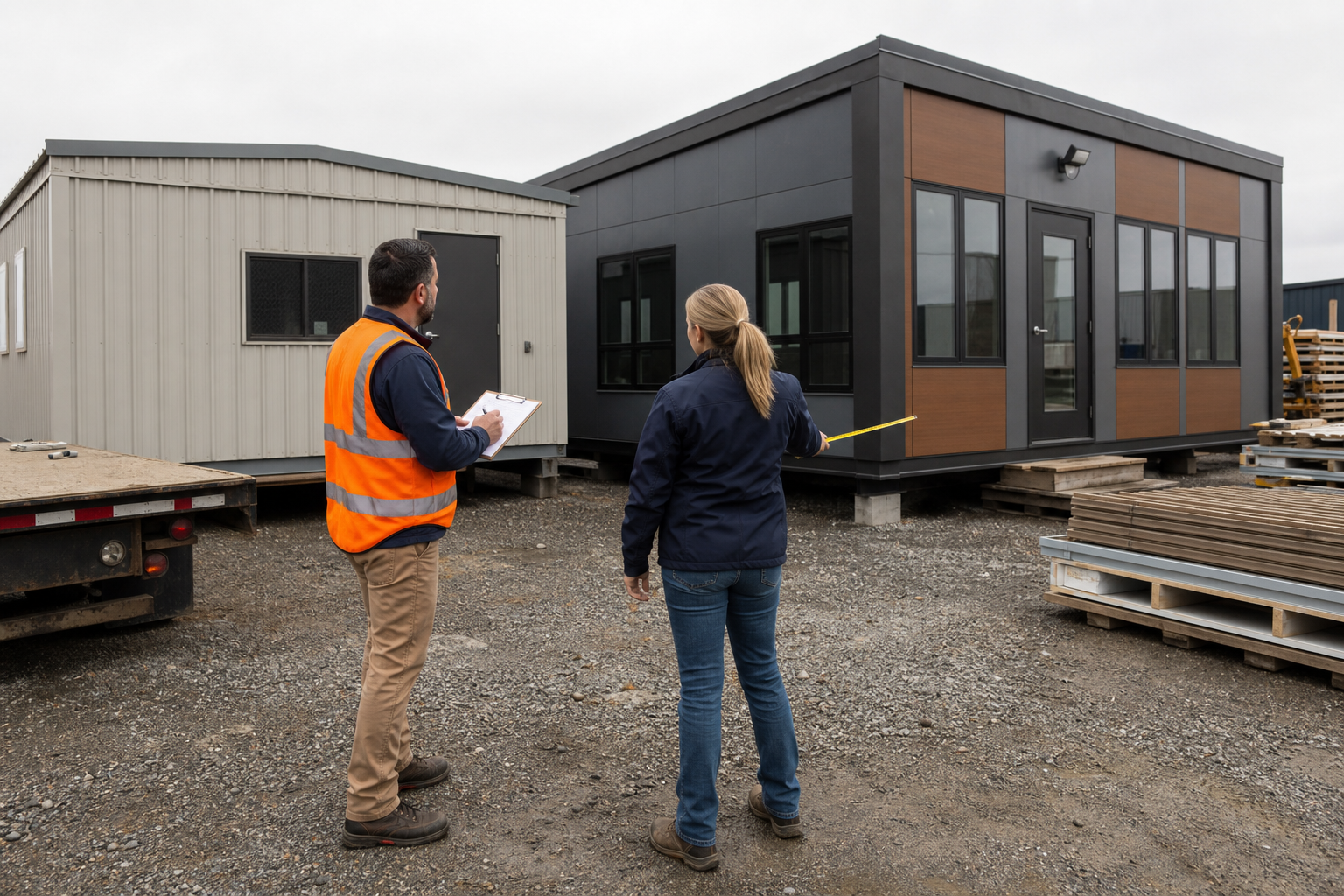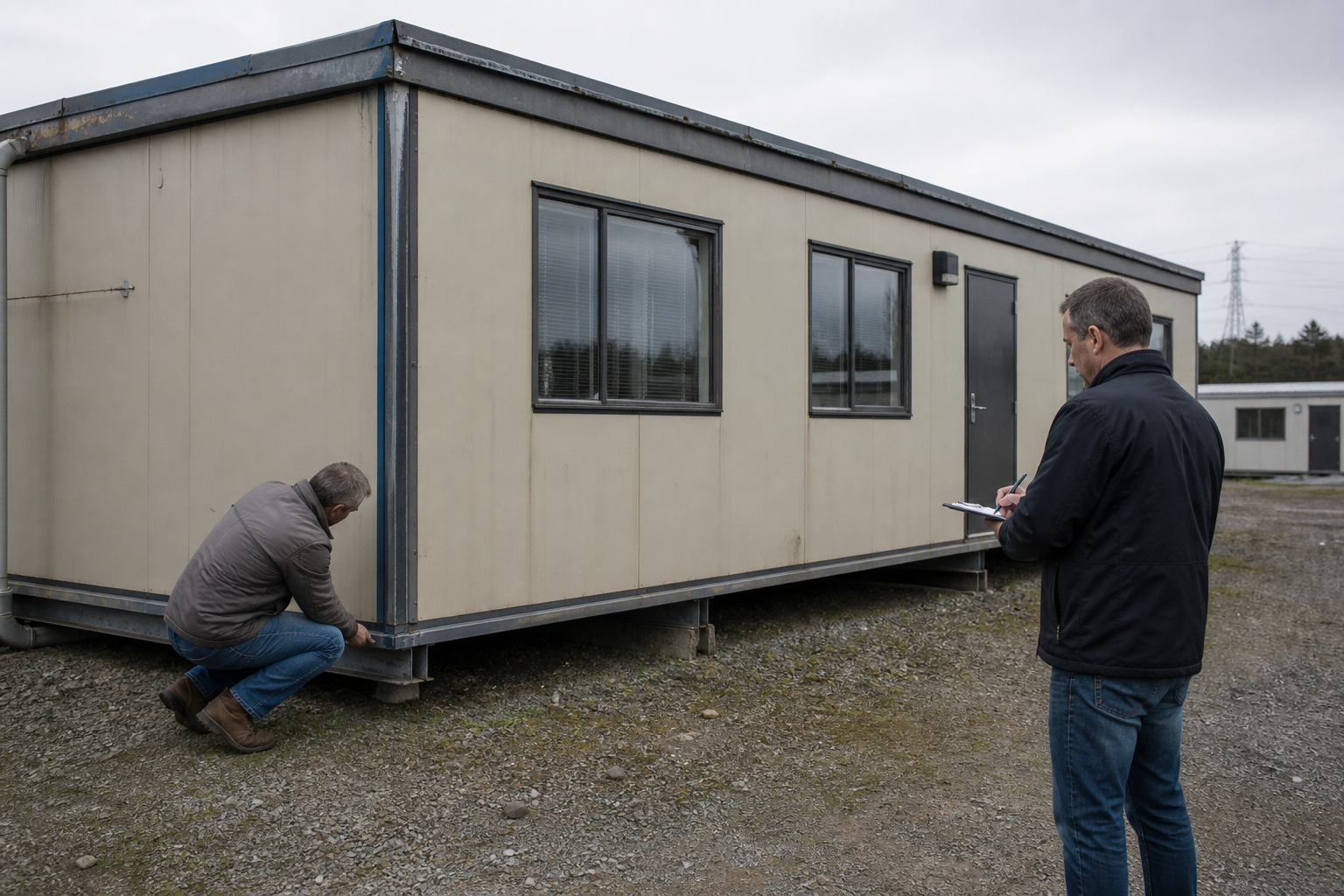
A used modular building can be a practical way to obtain space when the available inventory fits the use, site, code path, and schedule. The purchase price is only the beginning. Condition, documentation, removal, transport, repair, engineering, code upgrades, foundation, utilities, and installation determine whether the building is truly a good value.
Inspect the building before committing and evaluate it for the new location, not only its current condition. A sound office built for one climate or code history may need changes before it can serve another property.
1. Confirm identity and documentation
Collect manufacturer information, serial or module numbers, state labels, original drawings, structural data, past alterations, maintenance records, equipment information, and previous installation history. Missing records do not automatically disqualify a building, but they increase investigation and approval risk.
Ask the authority at the new site what documentation will be required for relocation and occupancy.
2. Inspect the structural frame
Review main beams, cross members, outriggers, columns, welds, bolted connections, lifting or attachment points, and signs of impact, corrosion, distortion, or unauthorized alteration. Pay attention to areas around old supports and transport connections.
A qualified structural professional should evaluate concerns and confirm suitability for new loads and site criteria.
3. Examine the roof and drainage
Inspect roof membrane or panels, seams, flashing, penetrations, drainage, edge details, patches, ponding evidence, and interior signs of water. Determine whether the roof can tolerate relocation and reconnection.
Plan repair access and replacement timing rather than assuming every existing patch will survive transport.
4. Review walls, windows, and doors
Look for water entry, damaged cladding, failed sealants, soft materials, corrosion, broken glazing, hardware wear, and air leakage. Check door operation and frame alignment.
Exterior finishes may need modification for the new climate, wind exposure, energy code, brand, or campus appearance.
5. Inspect the floor and underfloor area
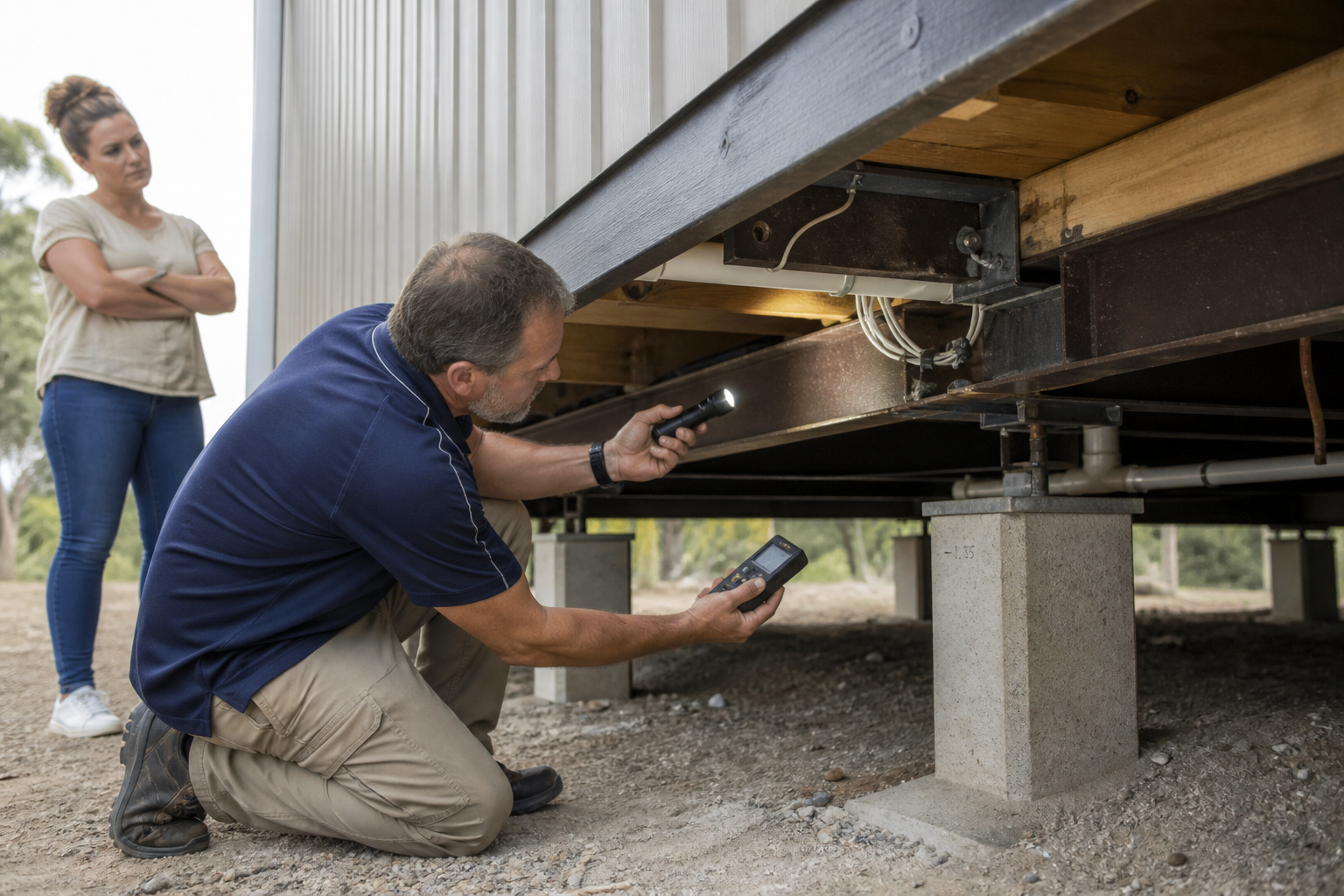
Walk the interior for soft spots, deflection, uneven transitions, damaged finishes, and evidence of moisture. Below, inspect decking, insulation, vapor protection, plumbing, wiring, ducts, supports, and pest or water damage where access permits.
Hidden underfloor repairs can be expensive after the building is installed close to grade.
6. Evaluate electrical systems
Identify service size, panels, breakers, wiring methods, receptacles, lighting, emergency systems, grounding, and modifications. Compare available capacity with the new use and equipment.
Electrical work should be inspected by qualified personnel. Old labels and informal additions need verification.
7. Evaluate plumbing and fixtures
Inspect water, waste, vents, fixtures, water heaters, freeze damage, leaks, corrosion, traps, and abandoned connections. Confirm whether plumbing locations suit the new foundation and utility plan.
8. Check HVAC condition and suitability
Record equipment age, capacity, refrigerant considerations, condition, controls, ductwork, ventilation, filtration, maintenance, and operating history. A working unit may still be poorly matched to the new climate, occupancy, or energy requirements.
9. Review fire and life-safety systems
Inspect exits, doors, alarms, emergency lighting, sprinklers where present, interior finishes, occupant-load assumptions, and egress arrangement. The new use or layout can change requirements.
10. Measure accessibility
Review door clearances, corridors, toilet rooms, controls, counters, and interior maneuvering space. The new site must add an accessible route, parking, entrance, and exterior components.
11. Price relocation and installation
Include disconnection, separation, weather protection, permits, escorts, transport, cranes or toters, storage, repair, foundation, utilities, module reconnection, roofing, exterior closures, stairs or ramps, inspections, and site restoration. Our modular building cost guide helps organize the installed budget.
12. Confirm approval at the new site
Before purchase, discuss the building’s age, labels, drawings, condition, proposed use, alterations, and destination with the appropriate authorities and design professionals. Do not assume a building approved at one location can automatically be occupied at another.
If a used building is a serious option, include inventory, destination, use, site information, and schedule in a modular building price request so relocation and site scope can be compared with new alternatives.
Frequently asked questions
Are used modular buildings always less expensive?
No. A favorable purchase price can be offset by transport, repair, upgrades, foundation, utilities, permits, and installation. Compare complete installed cost and remaining service life.
Can a used modular classroom become an office?
Possibly, but the new use, code, accessibility, systems, layout, documentation, and jurisdictional approvals must be evaluated. Conversion may require substantial work.
Who should inspect the building?
Use qualified professionals appropriate to the scope, which may include modular, structural, roofing, electrical, plumbing, mechanical, environmental, and code specialists.
Should the building be inspected after transport?
Yes. Transport and reassembly can affect finishes, seals, roof connections, systems, and alignment. Final inspections and commissioning are required before occupancy.