Permanent and relocatable modular buildings can use the same off-site construction process, but they should not be treated as the same project with different labels. The expected service period affects the foundation, exterior improvements, utility connections, financing, finish level, and what happens at the end of use.
The right question is not which type is better. It is which project path matches the owner’s need, property, budget, and level of certainty. A five-year swing-space requirement and a headquarters expected to serve for decades should lead to different decisions even when both use commercial modular construction.
What makes a modular building permanent?
A permanent modular building is planned as a long-term improvement to the property. It may use permanent foundations, architectural cladding, integrated entrances, extensive site improvements, and building systems comparable to conventional construction. The modules are manufactured off site, transported, and assembled, but the completed facility is intended to remain.
Permanent does not mean the building can never be altered. It means relocation is not the primary planning assumption. Design effort should focus on lifecycle performance, maintainability, campus integration, and long-term operating value.
What makes a modular building relocatable?
A relocatable building is designed so it can be disconnected, moved, and installed again. That usually influences the module configuration, foundation, utility connections, exterior features, and the amount of site work that can be recovered. Portable classrooms and leased offices are common examples, but relocatable buildings can support many uses.
Relocatable does not mean disposable. A well-specified building may serve through multiple installations. Each move still requires planning, transport, a new site, permits, repairs, and recommissioning.
Compare the expected service period
Start with the most likely duration and the range of uncertainty. If the owner is confident the space will be needed for 20 years, permanent improvements may deliver better value. If the requirement may end after three years, preserving flexibility can be more important than optimizing every long-term finish.
Do not use duration alone. A short-term building may still need demanding medical systems or a public-facing exterior. A long-term operation may occupy leased property where a relocatable approach protects the owner’s investment.
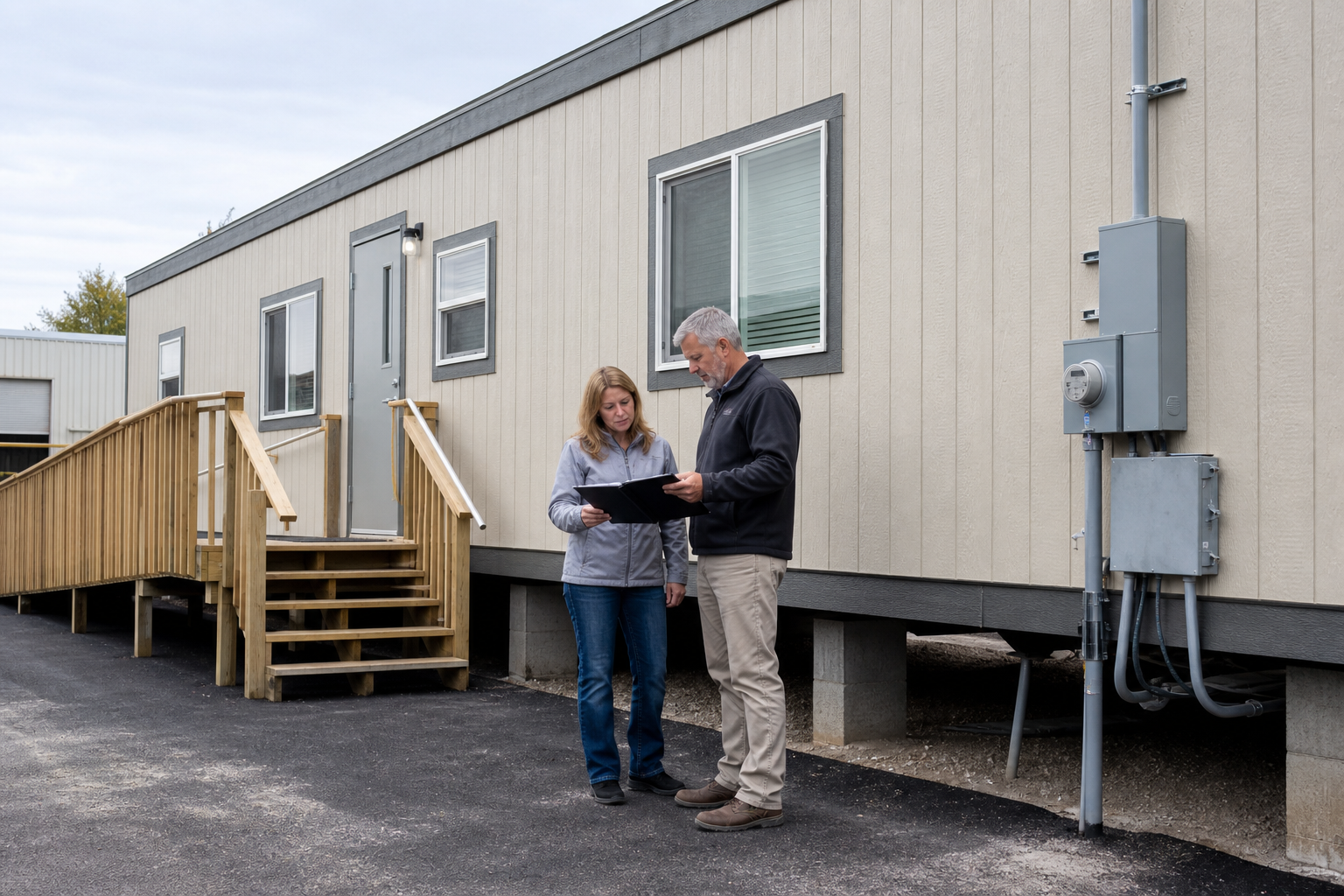
Foundation and utility decisions
Permanent projects often justify foundations and utility work designed to become part of the property. Relocatable projects favor systems that meet structural and code requirements while supporting future disconnection. Soil, frost, wind, seismic forces, flood elevation, building loads, and local requirements still govern the engineering.
Utility scope also changes the economics. Long underground runs, new transformers, lift stations, and extensive paving do not become inexpensive simply because the building is relocatable. Our site preparation checklist identifies the property work that belongs in the early budget.
Exterior appearance and campus integration
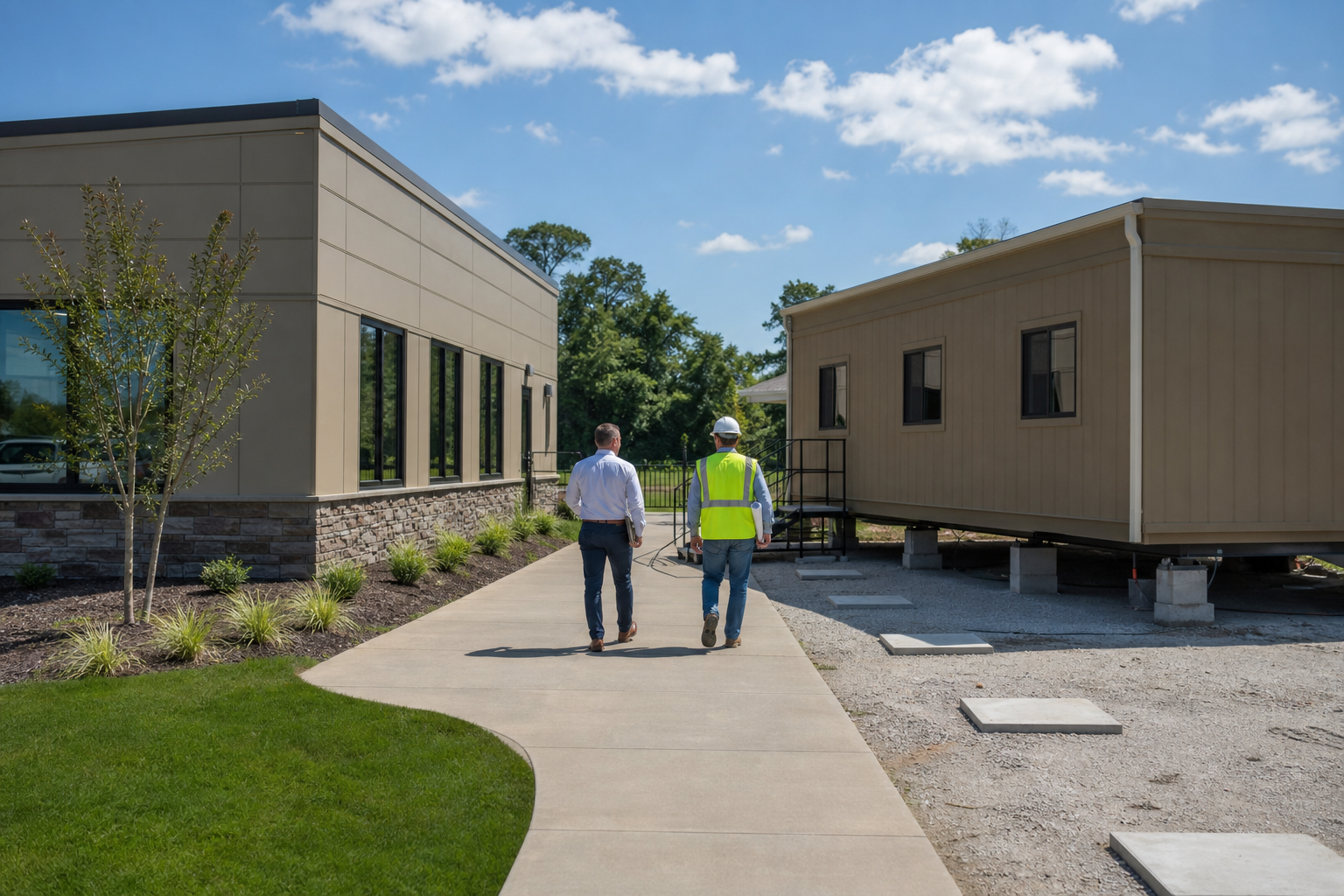
A permanent building may use masonry, composite panels, canopies, parapets, and site-built architectural elements to match an existing campus. Relocatable buildings can also look professional, but highly integrated site work may be difficult to recover when the building moves.
Invest where it matters to the users and the property. An accessible entrance, durable weather protection, comfortable interior, and clear wayfinding matter on both project types. Decorative work should reflect the expected service period and brand expectations.
Ownership, lease, and financing
Permanent buildings are commonly purchased or financed, while relocatable buildings may be purchased, rented, or leased. The financing method does not by itself determine whether a building is permanent. Owners should compare the complete installed cost, monthly obligations, maintenance, residual value, removal, restoration, and the cost of keeping space longer than planned.
Our guide to whether you should buy, rent, or lease a modular building explains the financial decision separately from the construction classification.
Plan the end before procurement
For a relocatable project, decide who owns removal, transport, repairs, site restoration, and utility abandonment. For a permanent project, plan future expansion, renovation, equipment replacement, and long-term maintenance access. End-of-use assumptions belong in the original project brief.
To compare the two paths responsibly, request modular building pricing with the site, use, duration, target schedule, and likely ownership plan. Pricing a generic box will not show the real difference.
Frequently asked questions
Can a relocatable modular building become permanent?
Sometimes, but the building, foundation, systems, energy performance, and approvals must support the new intended use. A local design professional and authorities should evaluate the conversion.
Are permanent modular buildings equal to conventional buildings?
They can be designed to meet the same applicable building, fire, accessibility, energy, and use requirements. Modular describes where major portions are constructed, not a reduced standard.
Is a relocatable building always cheaper?
No. Site work, utilities, delivery, permits, finishes, rental duration, and removal can outweigh differences in the building itself. Compare complete lifecycle cost.
Which option is faster?
Both can benefit from parallel factory and site work. A standard relocatable building may be available sooner, but approvals, site readiness, utilities, customization, and inventory determine the actual schedule.