
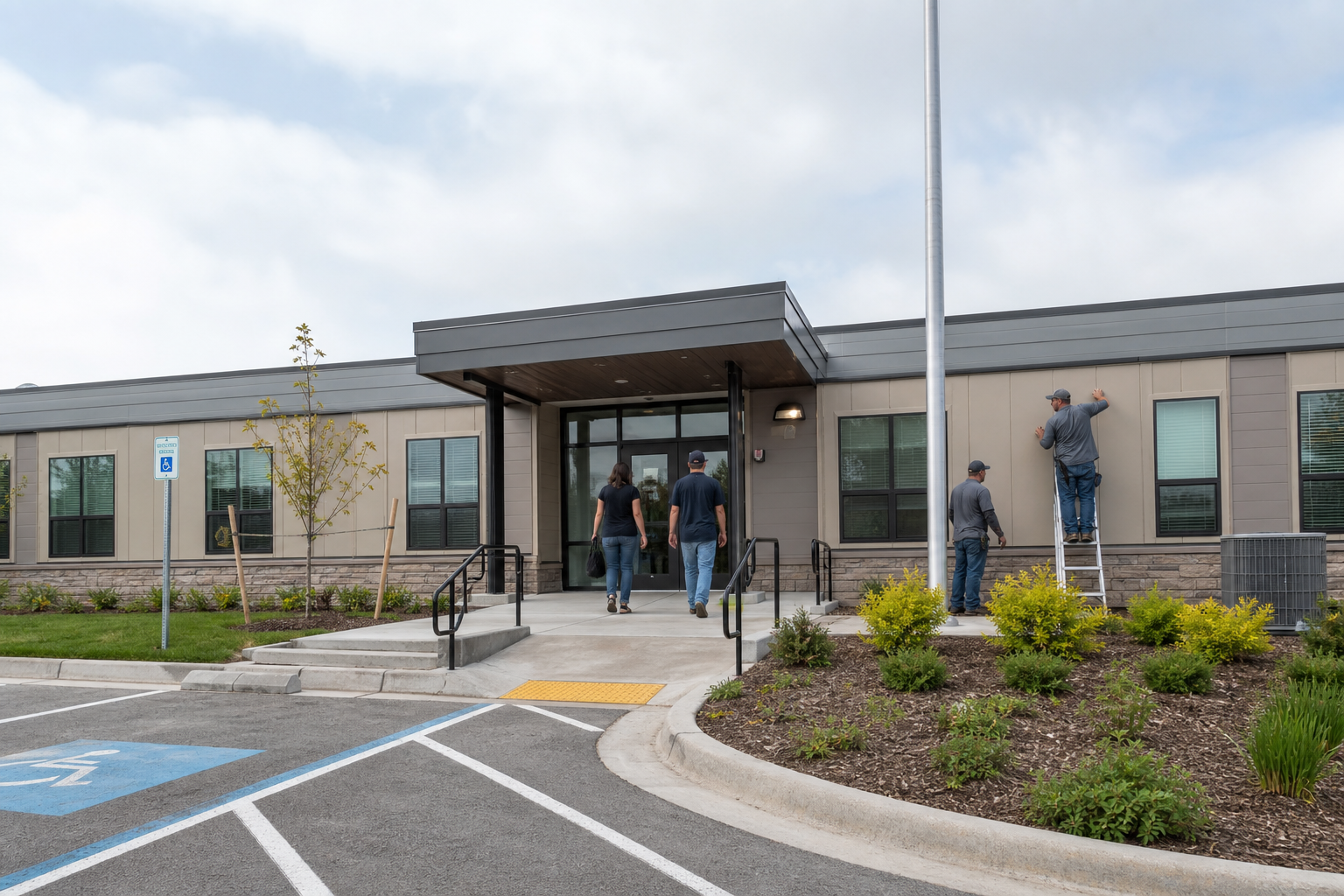
A modular government building must serve the public, protect staff and records, withstand daily use, and fit a procurement and approval process that can involve many stakeholders. Speed matters when an agency is replacing damaged space, expanding services, or working around renovation, but schedule should not come at the expense of public access or long-term operations.
The planning team should begin with the service being delivered. A permit counter, public-safety office, administrative building, polling facility, courthouse support space, and emergency operations room create different flows and security needs. Modular government buildings are most successful when the operational brief is complete before the procurement documents are issued.
Define the public service journey
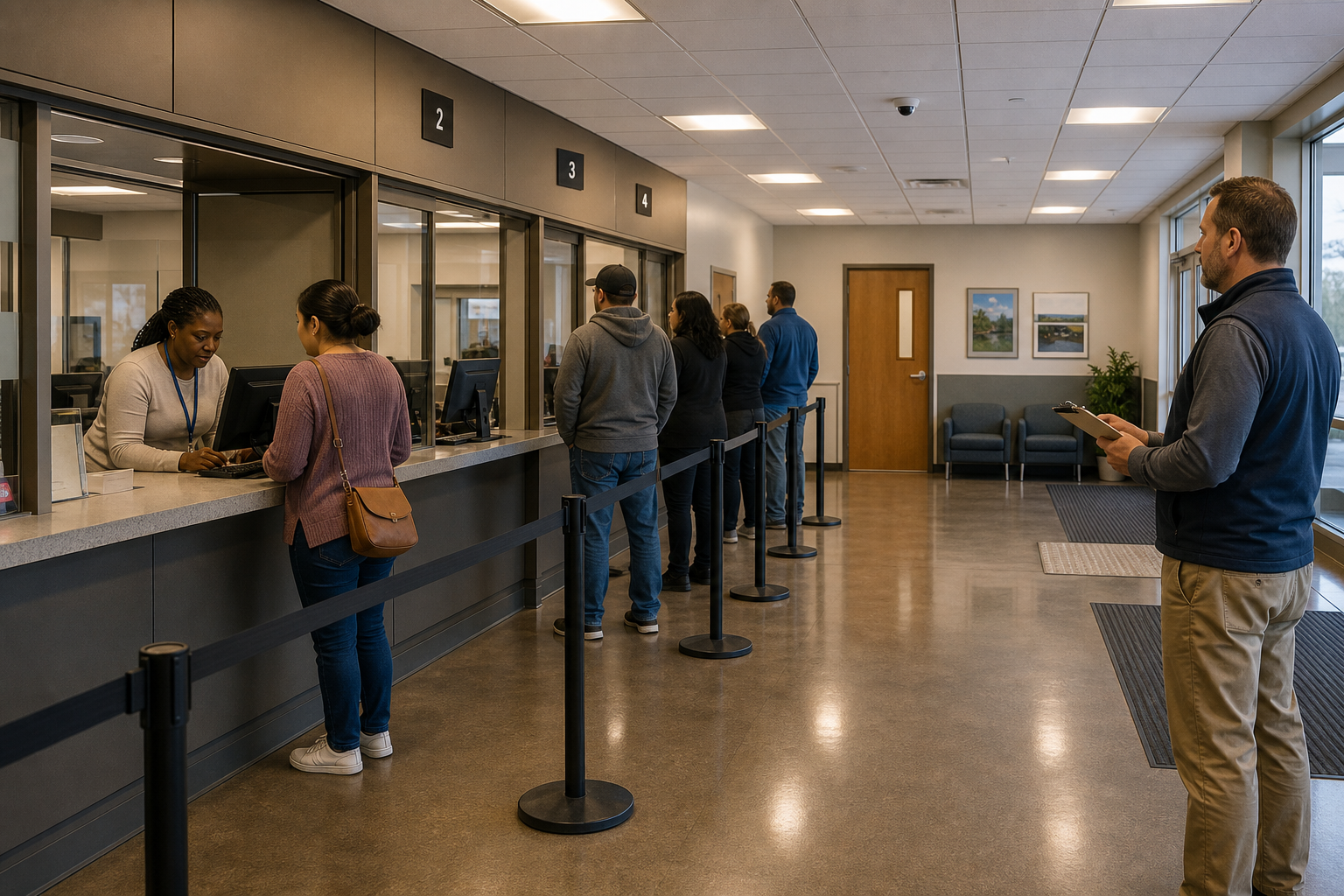
Follow a resident from arrival through parking, entrance, queuing, service, private consultation if needed, payment or document handling, and departure. Consider people who arrive early, need language or accessibility support, bring family members, or are unfamiliar with the process.
The layout should make the next step clear without exposing secure staff areas. Wayfinding, counter placement, waiting capacity, acoustics, and sightlines all support that goal.
Separate public, staff, and service zones
Public access should not require visitors to pass through staff work areas. Staff circulation, records, cash handling, deliveries, waste, and secure storage need their own logic. Doors and access control should support normal work and emergency egress.
A small building still benefits from clear zoning. Security problems often begin when one corridor is expected to serve every purpose.
Plan accessibility as public service
Accessible parking, loading, routes, entrances, service counters, seating, toilets, drinking fountains, alarms, and interior rooms should be coordinated from the property edge inward. Accessibility is both a compliance responsibility and a measure of whether residents can actually use the facility.
Public agencies may have standards beyond the general building code. Confirm owner criteria and the applicable federal, state, and local requirements early.
Specify durable, maintainable finishes
Public counters, waiting rooms, entries, and toilets receive concentrated wear. Select floors, wall protection, hardware, casework, glazing, and furnishings that maintenance staff can clean and repair. Standardized components can simplify future replacement.
Durability should not produce an unfriendly building. Daylight, comfortable acoustics, clear organization, and well-scaled spaces improve both public and staff experience.
Coordinate technology and records
Government services rely on data, secure networks, queue systems, cameras, access control, payment devices, public displays, interview-room technology, and records storage. Define equipment, pathways, power, cooling, mounting, and cybersecurity responsibilities.
Technology installation and agency testing belong on the occupancy schedule, not after construction is declared complete.
Address resilience and continuity
Identify services that must continue during a power loss or local emergency. Emergency power, communications, secure operations, weather criteria, fuel, redundancy, and recovery priorities depend on the agency mission.
A temporary continuity building may need faster deployment; a permanent public-safety facility may justify higher resilience criteria. State the mission before defining the solution.
Write procurement scope around outcomes
Public bids need clear responsibility for design, state modular review, local permits, foundations, site utilities, delivery, installation, technology, furnishings, testing, training, and closeout. Ambiguous scope can produce low initial numbers followed by exclusions and change orders.
Evaluation should consider completeness, schedule credibility, relevant experience, service plan, and lifecycle value—not only manufactured-building price. The nine drivers in our modular cost guide are useful when building a public budget.
Map approvals before issuing the schedule
Planning, zoning, building, fire, accessibility, state modular, environmental, utility, historic, and agency reviews may apply. Public meeting or funding milestones can also control decisions. One permitting lead should maintain the approval matrix.
Share the service program, site, procurement rules, funding constraints, and target date when requesting government modular building pricing.
Frequently asked questions
Can modular buildings be used for permanent government offices?
Yes. They can be designed for long-term public use with permanent foundations, durable materials, accessibility, security, and site improvements appropriate to the agency.
Can a modular building support secure public transactions?
Yes. Counter design, glazing, access control, queuing, interview rooms, records, cameras, and staff circulation can be coordinated around the agency’s security plan.
Does public procurement change the modular process?
It can. Bid rules, funding conditions, prevailing requirements, approvals, bonding, documentation, and evaluation methods should be integrated with design and delivery planning.
How quickly can a government modular building open?
Factory and site work can overlap, but procurement, design decisions, permits, utilities, technology, inspections, and agency turnover determine the actual date.