
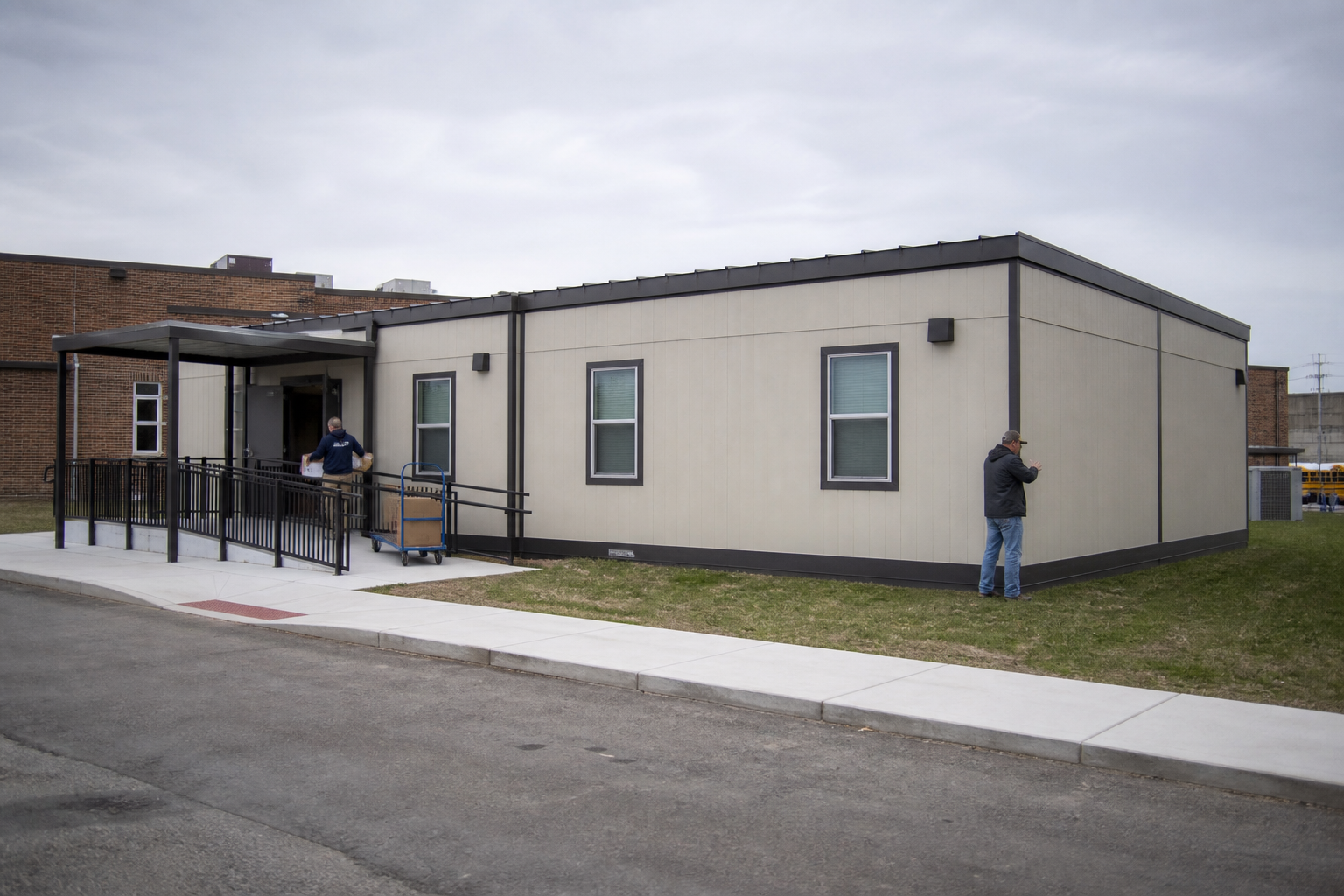
Modular classrooms solve a specific facilities problem: a school needs safe, code-compliant teaching space sooner than a conventional addition can usually be planned and built. They are most useful when enrollment, renovation work, program changes, or funding timelines create a gap between the classrooms a campus has and the classrooms it needs.
The building itself is only part of the answer. As with any commercial modular building, a successful classroom project also needs the right site, circulation, utilities, security, acoustics, and connection to the rest of campus. Those decisions determine whether the new rooms feel like an intentional part of the school or an inconvenient afterthought.
1. Enrollment grows faster than permanent construction
Enrollment changes rarely wait for a capital project. A district may confirm additional sections in spring and need classrooms ready for the next school year. Even when a permanent addition is planned, design approvals, budgeting, bidding, and site construction can take longer than the immediate need allows.
Modular classrooms create a practical bridge. The modules are built off-site while foundations, utility connections, and access work proceed on campus. That overlap can shorten the overall path to occupancy, although permits, local reviews, and site complexity still control the actual schedule. Our modular project timeline guide explains where time is gained and where it is not.
2. Renovation displaces existing classrooms
Roof replacement, mechanical upgrades, asbestos abatement, or a full interior renovation can remove part of a school from service. Trying to phase noisy or disruptive work around occupied classrooms often extends the project and complicates safety planning.
Temporary modular space can let contractors work in a clearer area while teachers and students remain in functioning classrooms. In this situation, plan the modular lease and site restoration together. A six-month academic need can easily become a longer rental if approvals or closeout work slip.
3. Specialized programs need dedicated space
Not every classroom is interchangeable. Intervention rooms, pre-K programs, science instruction, career training, administrative support, and special education may require different plumbing, casework, storage, power, acoustics, or restroom arrangements.
The useful question is not simply how many classrooms fit in a building. It is what must happen in each room. Build the educational program first, then size and configure the modules around it. That avoids paying later to move walls, add circuits, or force a specialized program into a generic layout.
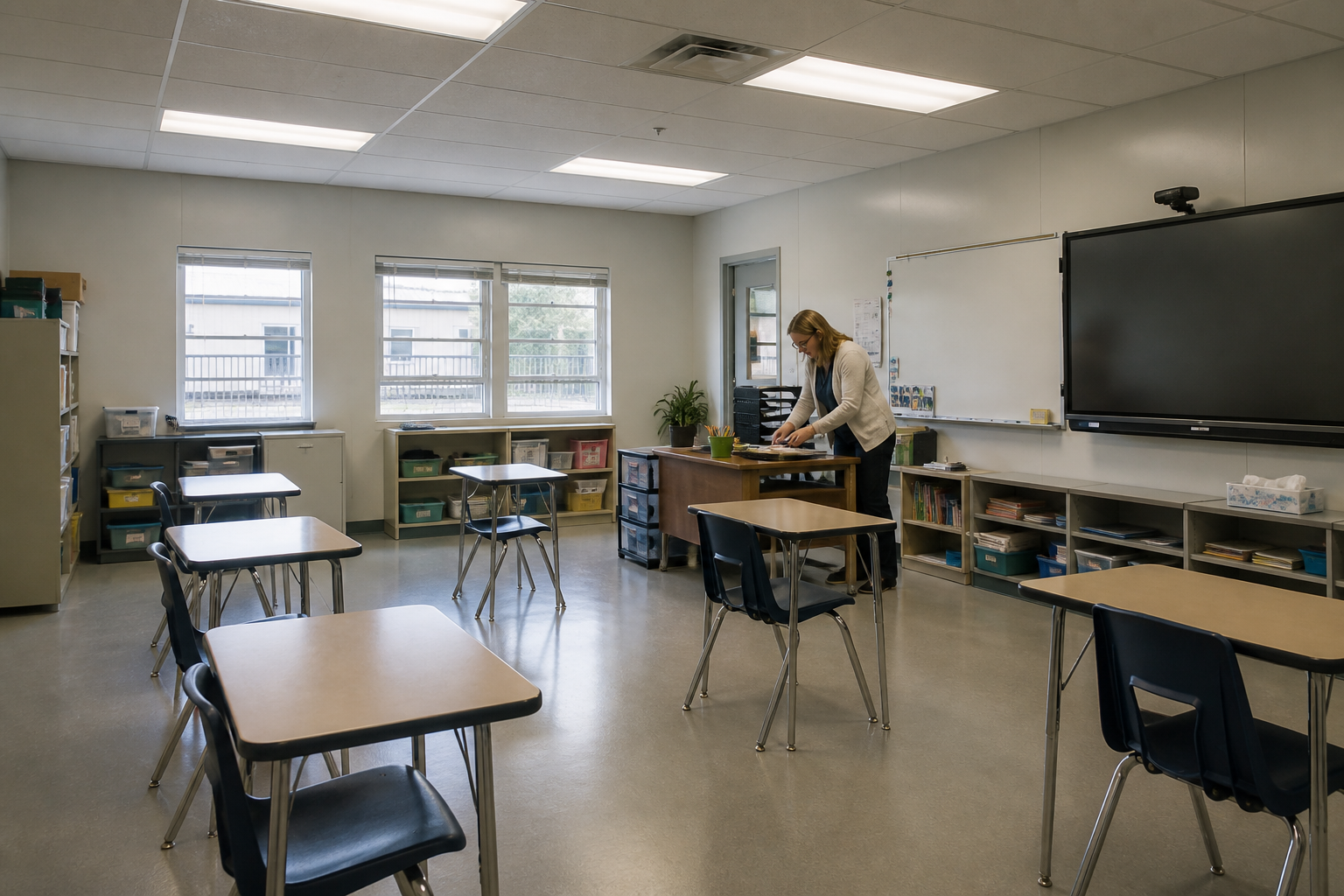
4. Portable classrooms replace aging temporary units
Many campuses have older units that stayed long beyond their original purpose. Water intrusion, inefficient HVAC, deteriorated finishes, accessibility issues, and outdated electrical systems can turn a short-term solution into a recurring maintenance problem.
Replacement should start with a condition assessment, not the assumption that every existing unit is beyond repair. Where replacement is justified, current portable classroom options can improve comfort and reliability. The removal plan matters too: disconnects, transport access, utility abandonment, and surface restoration all belong in the budget.
5. Campuses need capacity without surrendering future flexibility
A school may need space now but lack certainty about enrollment five or ten years ahead. Modular construction gives the owner more choices than a single permanent-building path. Depending on the project, a building may be purchased for long-term use, leased for a defined period, relocated, expanded, or reconfigured.
Flexibility is not automatic. Relocation has real costs, and a building designed for one site may require changes at another. Decide the likely service period early and compare the full installed and lifecycle cost—not just a monthly lease figure. The nine major items in our modular building cost guide apply directly to school projects.
What schools should decide before requesting a quote
- How many students, staff, and instructional spaces must the building support?
- Is the need temporary, long-term, or not yet certain?
- Which restrooms, sinks, special power, data, security, and storage are required?
- Where will accessible routes, parent traffic, buses, emergency access, and student transitions cross?
- Who controls permits, utility work, furnishings, technology, and final occupancy approvals?
Those answers make early pricing more useful and expose site constraints before they become schedule problems. Crown Modular can help turn the program, campus conditions, and target date into a realistic scope. Start with a project quote request when the basic need and site are known.
Frequently asked questions about modular classrooms
Are modular classrooms permanent or temporary?
They can be either. The intended duration affects the foundation, finishes, procurement approach, and lifecycle plan. A long-term modular classroom should be specified for that use rather than treated as an extended temporary rental.
How quickly can a modular classroom be installed?
The modules can often be produced or sourced while the site is prepared, but permits, utilities, foundations, delivery access, and inspections still set the real completion date. Early site investigation is usually the best schedule protection.
Can modular classrooms include restrooms and specialized rooms?
Yes. Restrooms, offices, storage, sinks, specialty power, and other spaces can be incorporated when they are defined early. Requirements involving plumbing, accessibility, ventilation, or special equipment should be resolved during planning.
Do modular classrooms meet school building codes?
They must meet the applicable building, fire, accessibility, energy, and educational-facility requirements for the project location. The exact review path varies by state and local authority, so jurisdictional requirements should be confirmed before design is finalized.