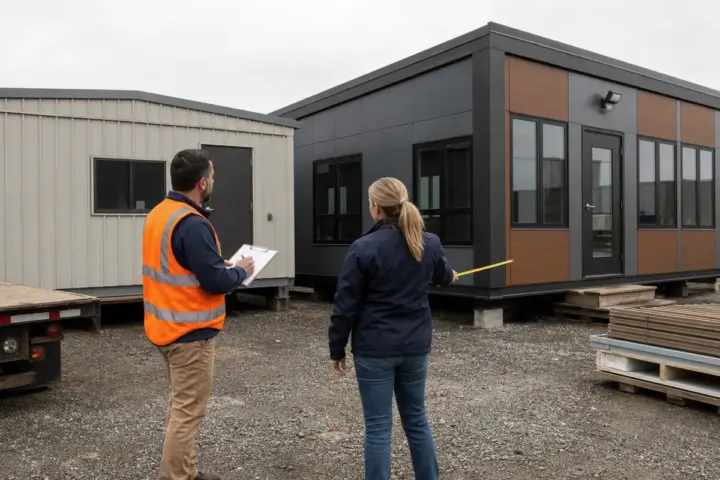
Portable classroom indoor air quality is not determined by the word “portable.” It is determined by ventilation, moisture control, materials, commissioning, maintenance, and where the building sits on campus. A new classroom with a poorly adjusted outdoor-air system can have problems; an older relocatable classroom with sound maintenance can perform well.
School districts should treat each portable classroom as a complete occupied building. The HVAC system, envelope, drainage, cleaning practices, and operating schedule need to work together from installation through daily use.
Start with the site
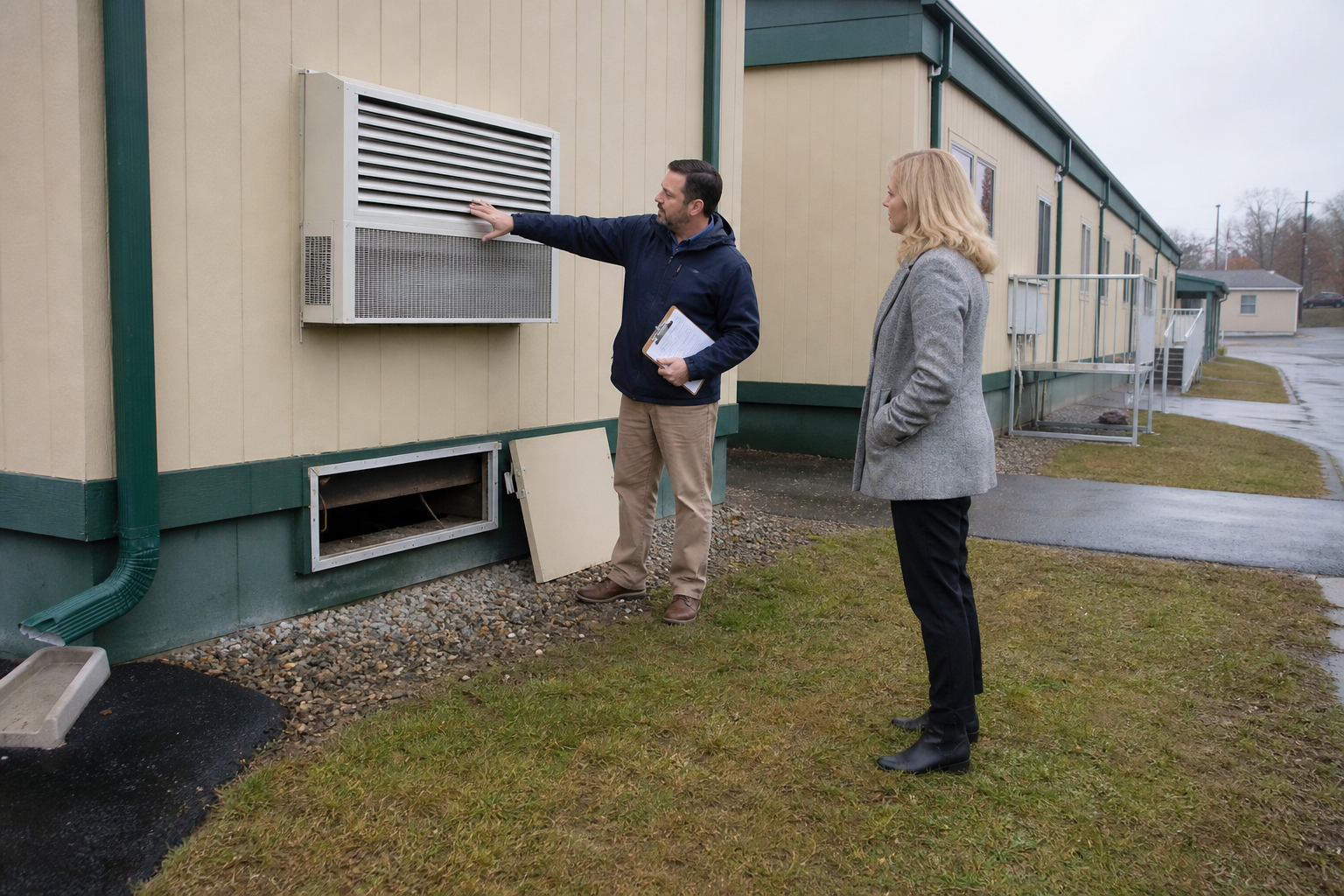
Keep outdoor-air intakes away from vehicle exhaust, dumpsters, loading areas, standing water, and other contamination sources. Review prevailing conditions during school arrival, bus activity, deliveries, and idling—not only during a quiet site visit.
Grade the site so water moves away from the building. Coordinate roof drainage, splash control, skirting, crawlspace access, landscaping, and paved areas. Chronic moisture below or beside a classroom can become an envelope and indoor-air problem.
Specify outdoor air as a real operating requirement
The HVAC design must provide the outdoor air required for the expected occupancy and local standards while maintaining comfort at design weather conditions. A unit capable of moving air is not enough if dampers remain closed, controls are misunderstood, or the fan does not operate as intended during occupancy.
The U.S. Environmental Protection Agency’s Indoor Air Quality Reference Guide for Schools includes specific guidance for portable classrooms, ventilation, moisture, commissioning, and maintenance.
Control moisture through the envelope
Roofing, flashing, wall joints, windows, doors, vapor-control layers, and floor assemblies should reflect the project climate. Inspect penetrations and module joints after transport and installation. Water entry is easier to correct before interior finishes and classroom materials hide the evidence.
Condensation can occur without a roof leak. The design team should coordinate insulation, air control, vapor behavior, HVAC capacity, and operating schedules rather than treating them as separate scopes.
Choose materials for rapid occupancy
New finishes, adhesives, furniture, and teaching materials can release odors. Select lower-emitting products where practical, protect materials from moisture during storage and transport, and provide ventilation before students enter.
Do not use fragrance to cover a persistent odor. Investigate the source, document conditions, and correct the cause.
Commission the classroom before handover
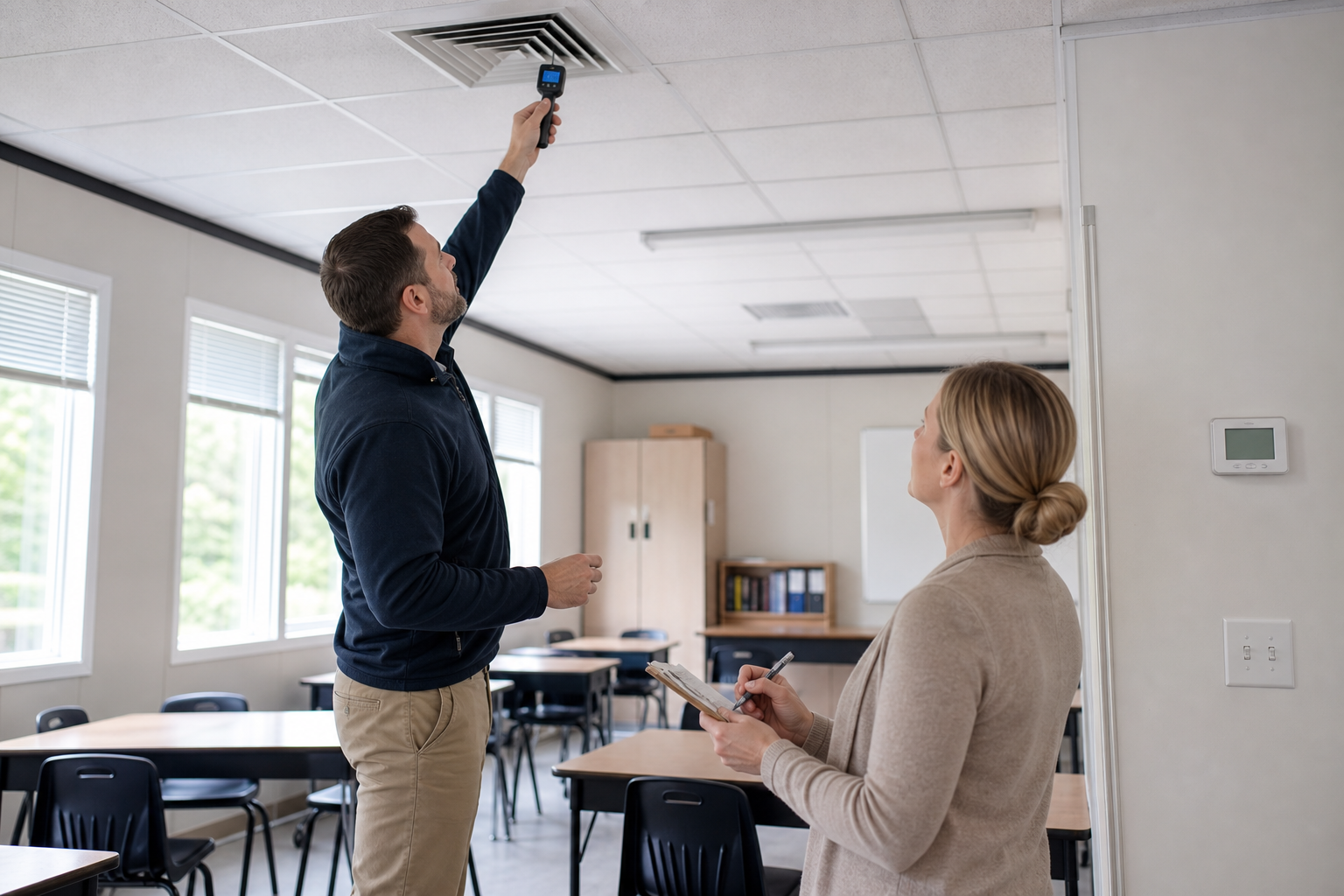
Commissioning should verify that outdoor-air components, exhaust, thermostats, dampers, fans, condensate, controls, and filters operate as designed. Test the classroom under the schedules staff will actually use.
Record settings and provide simple operator training. A maintenance team should know which components need routine attention and how to recognize a change in performance.
Manage acoustics along with ventilation
Teachers may reduce fan operation when equipment is loud. That turns an acoustic problem into a ventilation problem. Select and locate equipment with classroom sound in mind, isolate vibration, and verify operation before acceptance.
HVAC noise should be evaluated at normal teaching conditions, not only when the room is empty.
Maintain filters, drains, and outdoor components
Create a preventive-maintenance schedule for filters, coils, condensate, belts where applicable, dampers, controls, roof drainage, seals, and exterior grading. Keep vegetation and stored materials away from intakes and service access.
After major storms, prolonged shutdowns, or complaints, inspect conditions rather than waiting for the next routine interval.
Respond to complaints systematically
Record when and where symptoms or odors occur, occupancy, weather, HVAC status, recent cleaning or construction, and whether the issue changes during the day. Avoid declaring a cause before evidence supports it.
Schools can use the EPA’s tools to organize investigation and communication. Qualified HVAC, industrial hygiene, environmental, or building-envelope professionals may be needed for persistent concerns.
For a new classroom project, include ventilation, moisture control, commissioning, and maintenance expectations when requesting portable classroom pricing. The lowest initial building number is not useful if essential performance is omitted.
Frequently asked questions
Are portable classrooms more likely to have air-quality problems?
They can experience the same sources as other school buildings. Risk increases when ventilation, moisture, siting, commissioning, or maintenance is weak. Construction method alone does not determine performance.
Should classroom HVAC fans run continuously?
Operation should follow the designed ventilation and control sequence for occupied hours. The school’s engineer or qualified technician should verify the correct setting for the installed system.
Where should an outdoor-air intake be located?
It should be placed away from exhaust, traffic, dumpsters, standing water, and other contamination sources while remaining serviceable. Exact clearances follow applicable codes, standards, and equipment instructions.
What should be checked before students move in?
Verify ventilation, temperature control, filtration, condensate drainage, envelope dryness, odors, cleaning, controls, acoustic performance, and staff maintenance instructions.