Useful modular building prices show more than the factory-built structure. To find the best value for your project, request a modular building price comparison that separates the building, site work, delivery, installation and ready-for-use scope.
1. Building size, layout and occupancy
Square footage matters, but two buildings of the same size can require very different construction. Corridors, restrooms, high plumbing counts, specialty rooms, structural loads and finish levels all affect the price. Start with a practical floor plan and the number of people each space must support.
The commercial modular building choices show why an office, classroom, clinic and restaurant need different scopes even when their footprints look similar.
2. New, used or rental inventory
Standard rental inventory may offer a lower initial commitment for temporary needs. A used building can be economical when its condition and existing layout match the project. New construction provides more design control. Compare the complete installed result, not just the advertised unit price.
3. Delivery distance and site access
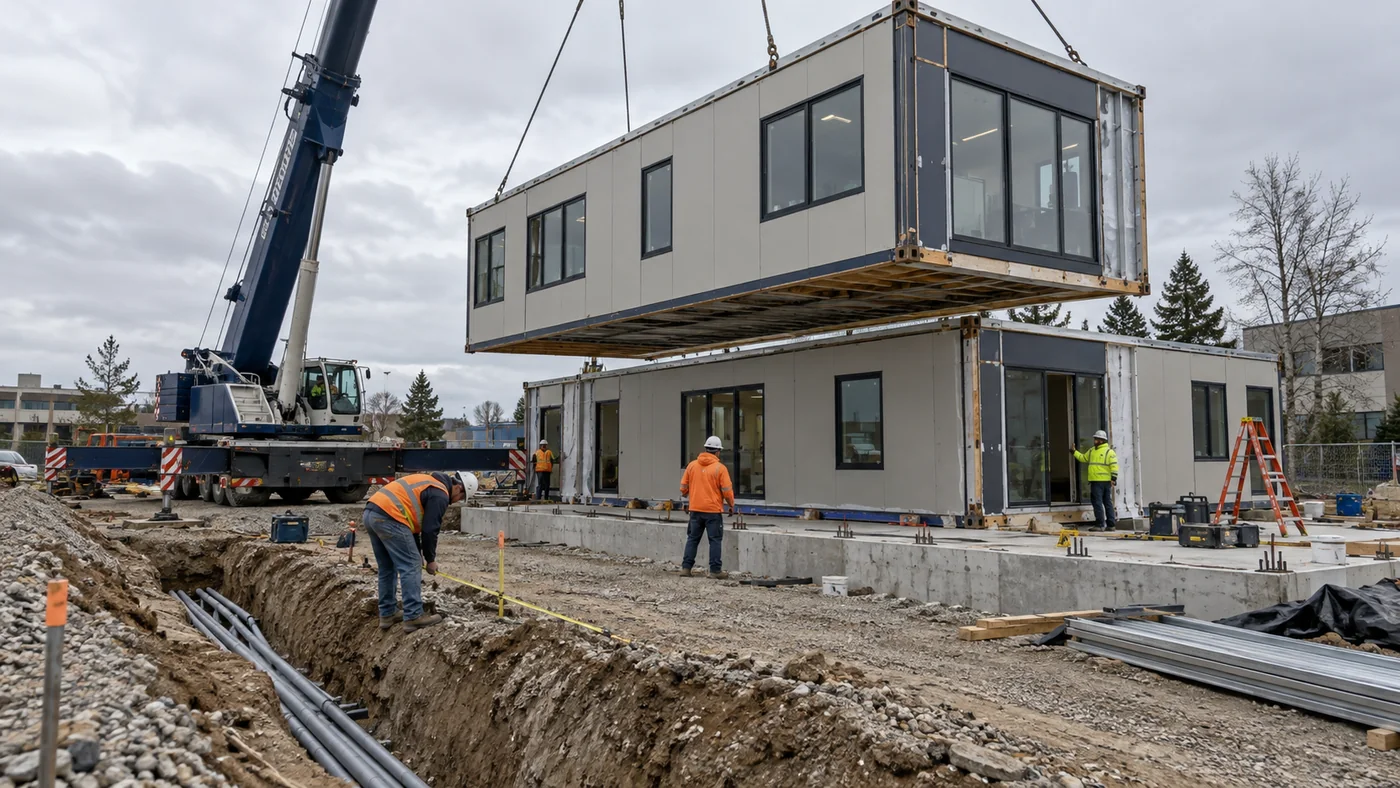
Freight, escorts, crane time and installation crews depend on the building, origin and destination. Tight turns, overhead restrictions, soft ground or limited crane setup space can change the plan. Review the modular installation cost guide before treating delivery as a small line item.
4. Foundations and site preparation
Surveying, grading, drainage, foundations, access routes and restoration may sit outside the building supplier’s base number. The site preparation checklist helps buyers identify work that must be ready before delivery.
5. Utilities and building systems
Electrical service, water, sewer, data, fire protection and HVAC connections need defined endpoints. Ask whether the price covers equipment inside the module, final site connections or both.
6. Permits, design and inspections
Factory review does not necessarily replace local site, utility, fire or occupancy approvals. Use the modular permit guide to assign responsibility and allowances.
7. Financing and end-of-use plans
Ownership, rental term, relocation and restoration can change total cost. Review modular building financing options alongside the project schedule and expected use period.
A strong comparison uses the same scope for every supplier. The modular building buyer’s guide and quote checklist can help you turn a promising price into a realistic project budget.